Grammar
English - Online General English Lessons With Teachers
Learn English grammar basic topics like nouns, pronouns, adjectives, articles, with daily online English courses. It also covers advanced level topics like tenses, quantifiers, modal verbs, conjunction, types of sentences and so on. You can practice your grammar skills with different exercises.

Relative pronoun 2
In this grammar lesson, learn Relative pronouns (who, whoever, whom, whomever, that, which, when, where, and whose) with some exercises .

The Conditional Sentences
Through this conversation course, you will be able to discover how the conditional is formed. Used to refer to a possible condition or probable result, but also to make statements about the real world or particular situations, the conditional is ubiquitous in English. After having done some practical exercises, you will put yourself in a situation in order to validate your achievements.
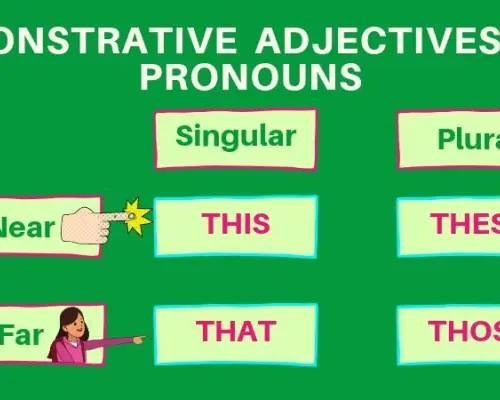
Demonstrative Pronouns
Demonstratives are words, such as this and that, used to indicate which entities are being referred to and to distinguish those entities from others. In this English topic, we'll take a look at some examples of demonstrative pronouns and practice with examples.
Quantifier: How much & How many
Learn to use questions which begin with "How much?" and " How many?" Grammar lessons with some examples and exercises.

Simple Past Tense
Describe an action that happens in the past. With practical exercises, train you to respond using the past. Grammar lessons with practical exercises.
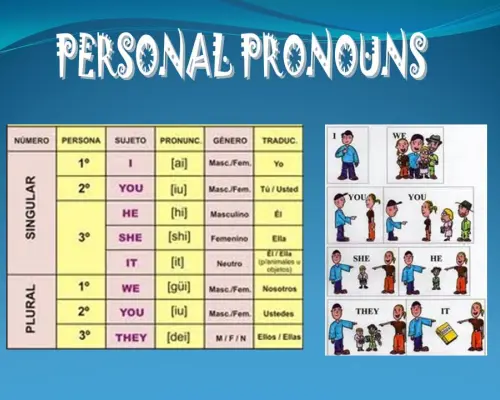
Personal Pronouns
The use of personal pronouns used to build the basis of sentences. For Example- I, you, he, we, you, they . Grammar lessons with practical exercises .
Possessive Adjectives
To discover possessive pronouns with Albert's teachers: "Mine, hers, yours, ours, yours etc .." Through this course of grammar and vocabulary, you will learn to express possession, ie who belongs to whom / what. Practice using these pronouns/adjectives with practical exercises where you have to put them in the right sentences in the right direction. - Part 2

Queries
Learn to make simple questions using Who, Whom, What, When, Where, Why & Which.

What Is This?
Are you looking for a fun way to learn English? Try using educational games. In this English lesson, you will play and learn at the same time. You will guess the names of different objects after looking at their pictures. Learning has never been more amusing!

Exercise 9 For High School
This lesson is a combination of various types of exercises. It has been carefully drawn up to help you practice your English - Reading, Listening, Speaking and Writing abilities. These exercises would provide you ample practice to improve your language skills. Good Luck!